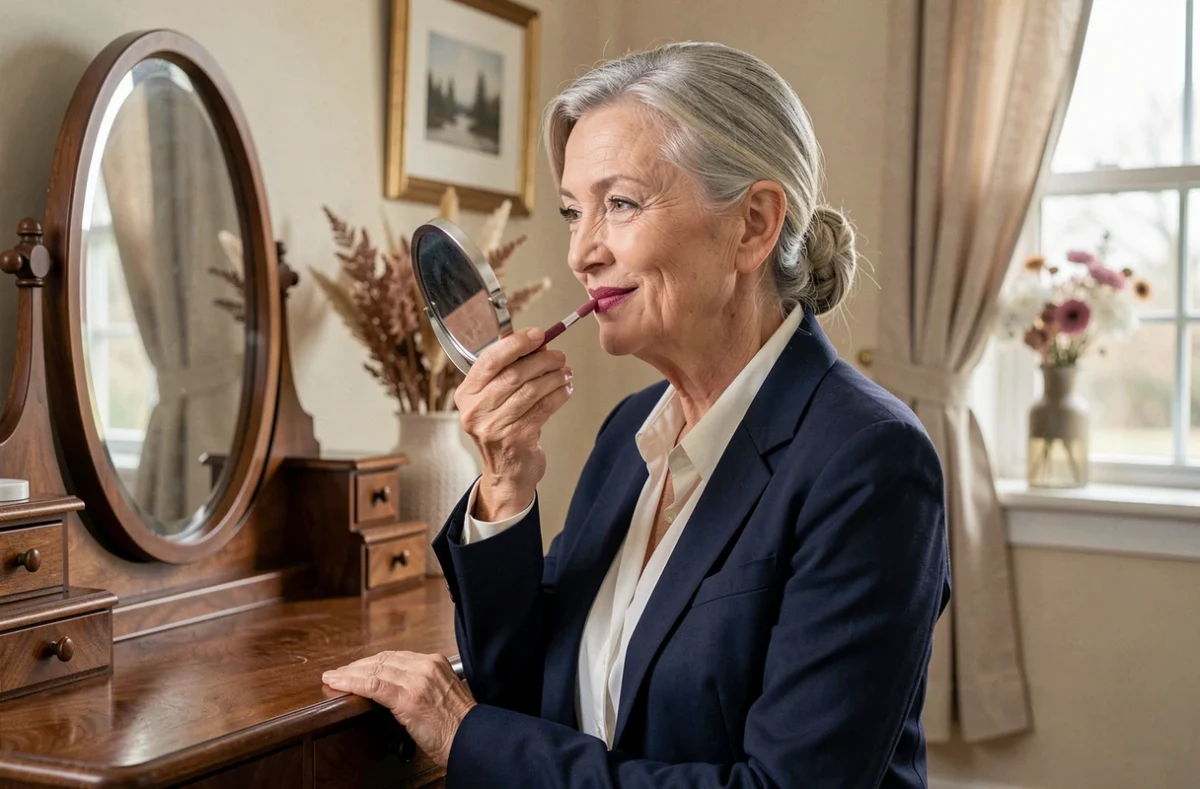
After 60, lips lose volume and natural hydration. The outline becomes less defined, fine lines deepen, and formulas that worked at 40 may accentuate these changes instead of softening them. Choosing a lipstick then relies on often overlooked technical criteria: composition, finish, the formula’s ability to not migrate into fine lines, and even sun protection.
Allergens and INCI list: what the regulations change for sensitive lips
Mature lips are more reactive. Dryness, tingling, discomfort after application: these signals sometimes indicate sensitivity to fragrance substances present in the formula. The reflex to turn the tube to read the INCI list remains rare, even though it becomes particularly relevant after 60.
Regulation (EU) 2023/1545 expands the list of fragrance allergens that must be listed individually on cosmetic labels. For leave-on products like lipstick, the declaration threshold is set at 0.001%. This regulatory change provides a concrete tool for consumers to identify substances that cause reactions.
If you’ve ever felt discomfort with a lipstick without identifying the cause, checking for fragrance substances like linalool, limonene, or citronellol on the packaging can guide your choice. Knowing which lipstick color after 60 suits your complexion is not enough if the formula irritates the lips within the first hour of application.
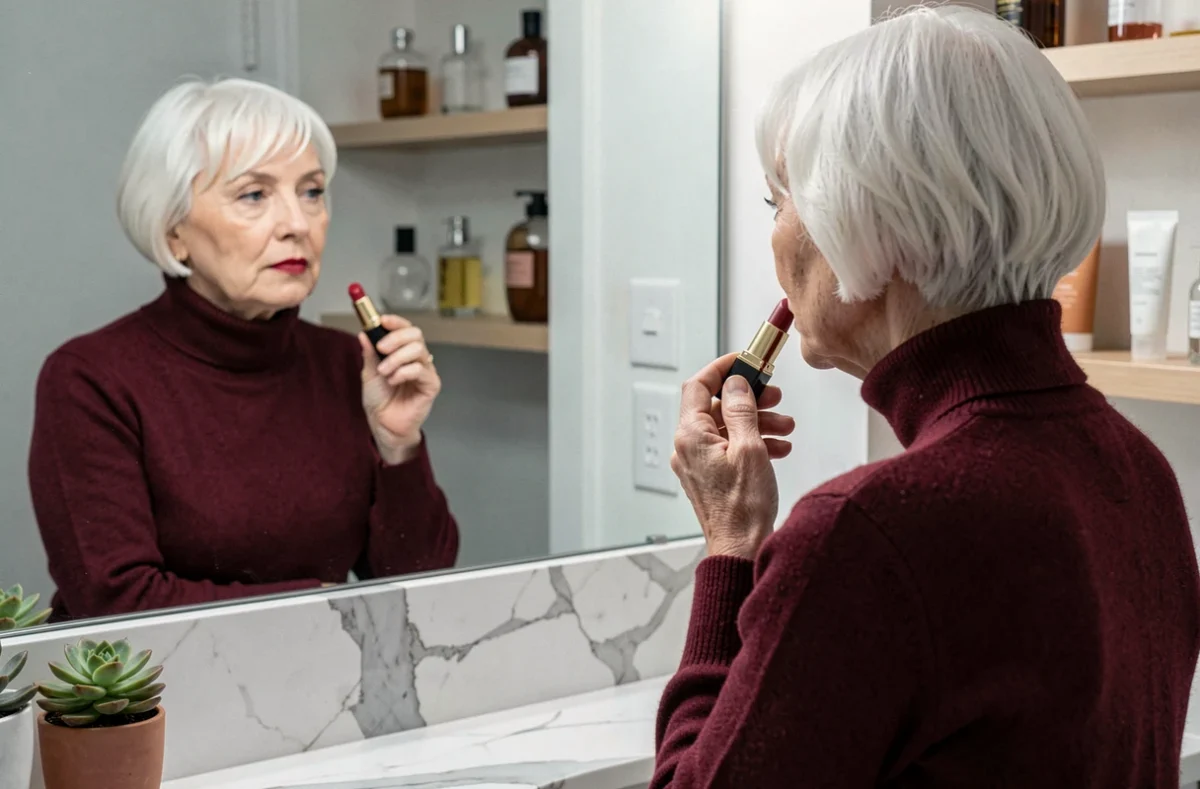
Satin, creamy, or matte finish: balancing comfort and wear on mature skin
The majority of guides recommend avoiding matte after 60. This advice deserves nuance. A strict, dry matte does indeed accentuate every fine line by dehydrating the surface. In contrast, so-called “velvet” or “soft matte” formulas, enriched with emollient agents, offer a matte finish without the cardboard effect.
Creamy and satin textures remain the most comfortable for mature lips. They leave a film that reflects light, visually diminishing fine lines. The compromise lies between wear and hydration: the more comfortable a formula is, the more easily it migrates into the lines around the mouth.
Hybrid lipsticks, which combine makeup and care, change this balance. Some formulas incorporate panthenol, emollient oils, or hyaluronic acid to limit dryness without sacrificing wear. Comparing compositions rather than just finishes helps identify products that deliver on their promises.
- Satin finish: maximum comfort, average wear, ideal for very dry or chapped lips
- Creamy finish: good balance between color and hydration, suitable for daily use
- Velvet or soft matte finish: superior wear, provided the formula contains care agents to prevent dryness
- Gloss or vinyl finish: adds optical volume but can migrate quickly into fine lines if the outline is not prepared
Lipstick color and complexion after 60: shades that really work
Rosy shades, soft corals, and woody pinks are among the most cited colors for mature skin. This consensus is based on a simple principle: a shade close to the natural color of the lips rejuvenates the face instead of freezing it.
Bright reds should not be excluded. A blue-toned red suits cool complexions, while an orange-toned red pairs better with warm skin. The difficulty lies not in the color itself, but in its intensity. A very dark red visually shrinks the mouth, accentuating the age-related loss of volume.
Very light shades, such as beige nudes or pale pinks, pose another problem: they can give a washed-out appearance to the face, especially if the hair is white or gray. A slightly deeper rosy nude offers a better balance between subtlety and radiance.
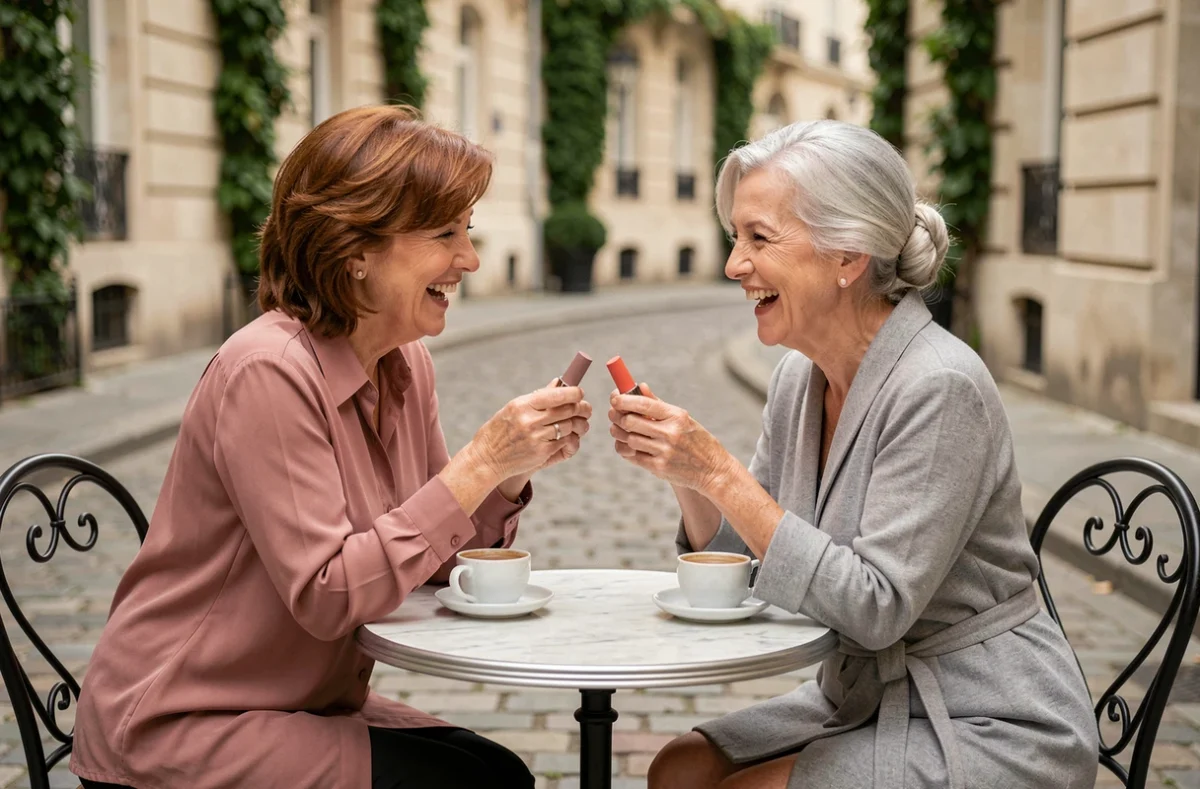
Wearing glasses also alters perception. Colorful or thick frames draw attention to the eyes, allowing for a more understated lip. Conversely, thin or transparent frames leave the face looking more “open” and can support a bolder lip color.
Sun protection for lips: an angle that makeup alone does not cover
Lips contain almost no melanin. They are therefore vulnerable to UV rays, and this vulnerability increases with age as natural cellular repair mechanisms slow down. Most classic lipsticks contain no sun filters.
Some brands offer tinted balms or lipsticks that include SPF. These products allow for a combination of color and protection, but their protection factor often remains modest. Applying a lip balm with SPF under lipstick is an alternative for those who cannot find a tinted protective formula to their liking.
This extra step takes a few seconds and protects an area of the face that regular anti-aging treatments (creams, serums) do not cover.
Preparation and application: steps that change wear on mature lips
Preparing the lips is as crucial to the result as choosing the product. A gentle scrub (once or twice a week) removes dead skin and smooths the surface. A hydrating balm applied a few minutes before makeup softens the skin and improves pigment adherence.
- Tracing the outline with a pencil the same shade as the lipstick prevents the color from bleeding into fine lines
- Applying lipstick with a brush rather than a bullet allows for a finer, more precise application, reducing overflow
- Blotting with a tissue between layers sets the pigments and extends wear without adding bulk
Lip liner remains the most effective step against the migration of lipstick into perioral wrinkles. Competitors all mention it, but the technical reason is rarely explained: the pencil creates a waxy barrier that physically blocks the movement of liquid or creamy pigments.
Choosing a lipstick after 60 is not just about color. The formula, composition, skin preparation, and sun protection weigh equally in the final result. Checking the INCI list for allergens and testing the finish on one’s own lips rather than the back of the hand are part of the technical reflexes that distinguish aging makeup from radiant makeup.