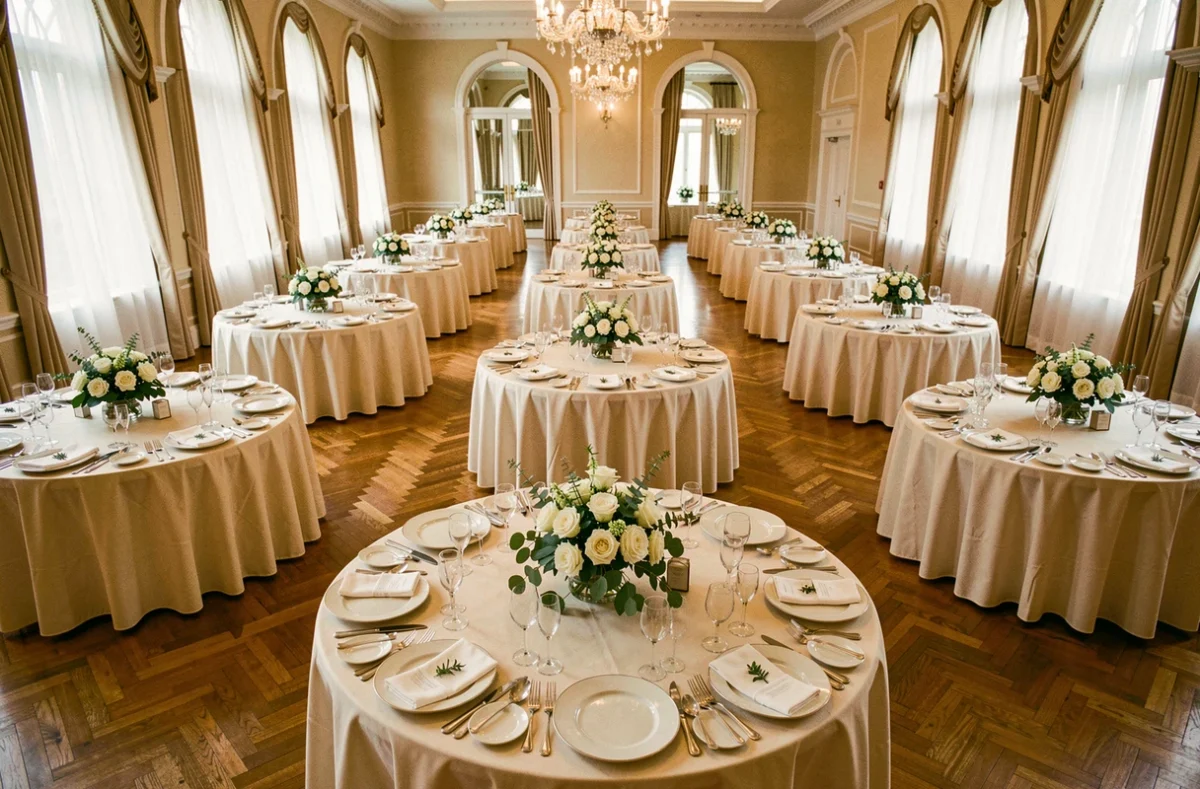
The table layout in an event hall determines everything else: how smoothly service runs, how comfortable guests feel, and even the atmosphere in the room. Before choosing between round, rectangular or U-shaped tables, start with the venue itself—its dimensions, safety requirements and the areas that need to remain clear of tables.
Walkways and emergency exits: start by planning the open space
Have you ever noticed how a room seems smaller once the tables are set up? That’s normal. The usable area for guests is only a fraction of the total floor space.
Before placing any tables, locate the emergency exits, kitchen or catering access points, and safety equipment (fire extinguishers, emergency lighting units). Fire safety regulations for public-access buildings require that escape routes remain clear at all times, and their required dimensions depend on the type of venue and its layout.
First, mark the no-go areas on your plan: evacuation routes, fire doors and access to the restrooms. Only then will you see how much space is actually available for setting up tables in the event hall without obstructing movement.
Also bear in mind that each guest needs enough room to pull out their chair without blocking a walkway. If two rows of tables face each other, the gap between the backs of the chairs should be wide enough for someone to pass through comfortably.
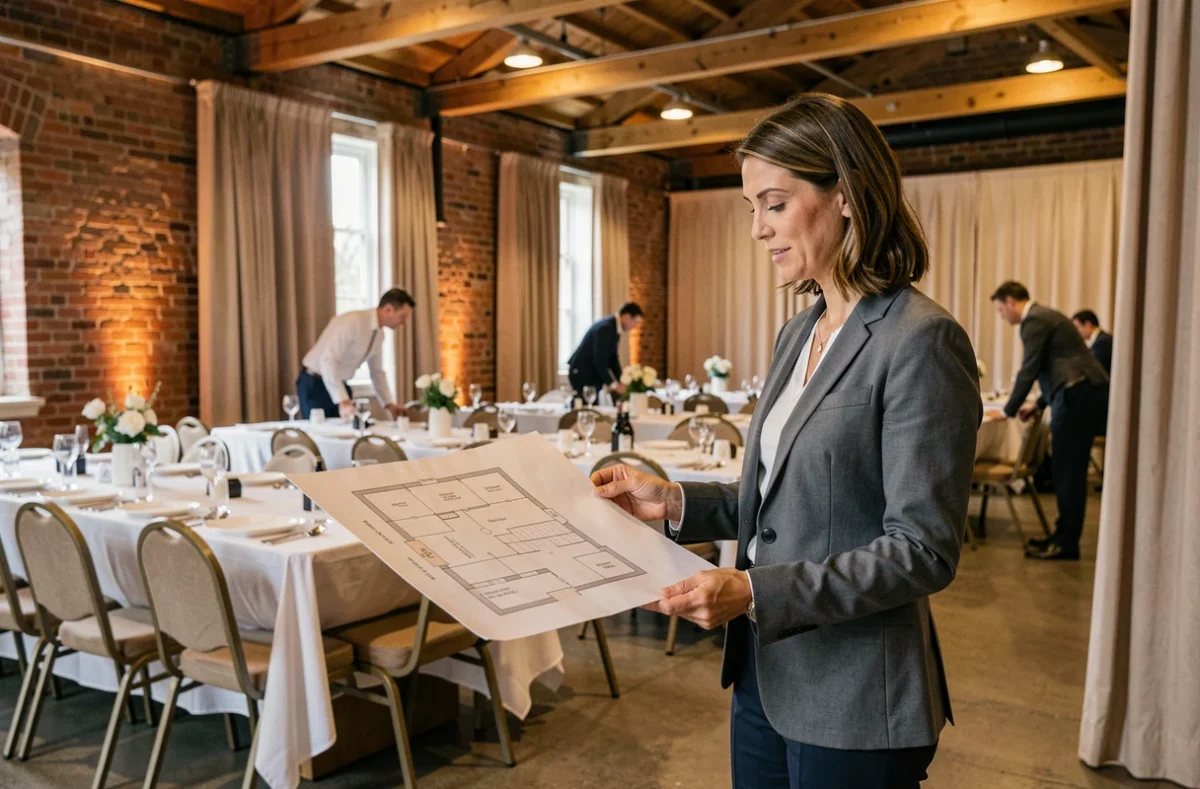
Table shapes and event types: choosing the right layout
Choosing between round, rectangular or U-shaped tables isn’t just a matter of taste. Each shape affects seating capacity, the quality of conversation and how easily staff can serve guests.
Round tables: a sociable setting and easy conversation
Round tables encourage conversation because everyone can see all the other guests at their table. They’re the most common choice for weddings and celebratory meals.
The downside: they take up more floor space than rectangular tables with the same number of seats. In a narrow room, you may have to sacrifice capacity or squeeze the tables together so tightly that service becomes difficult.
Rectangular tables: efficient use of space and a banquet feel
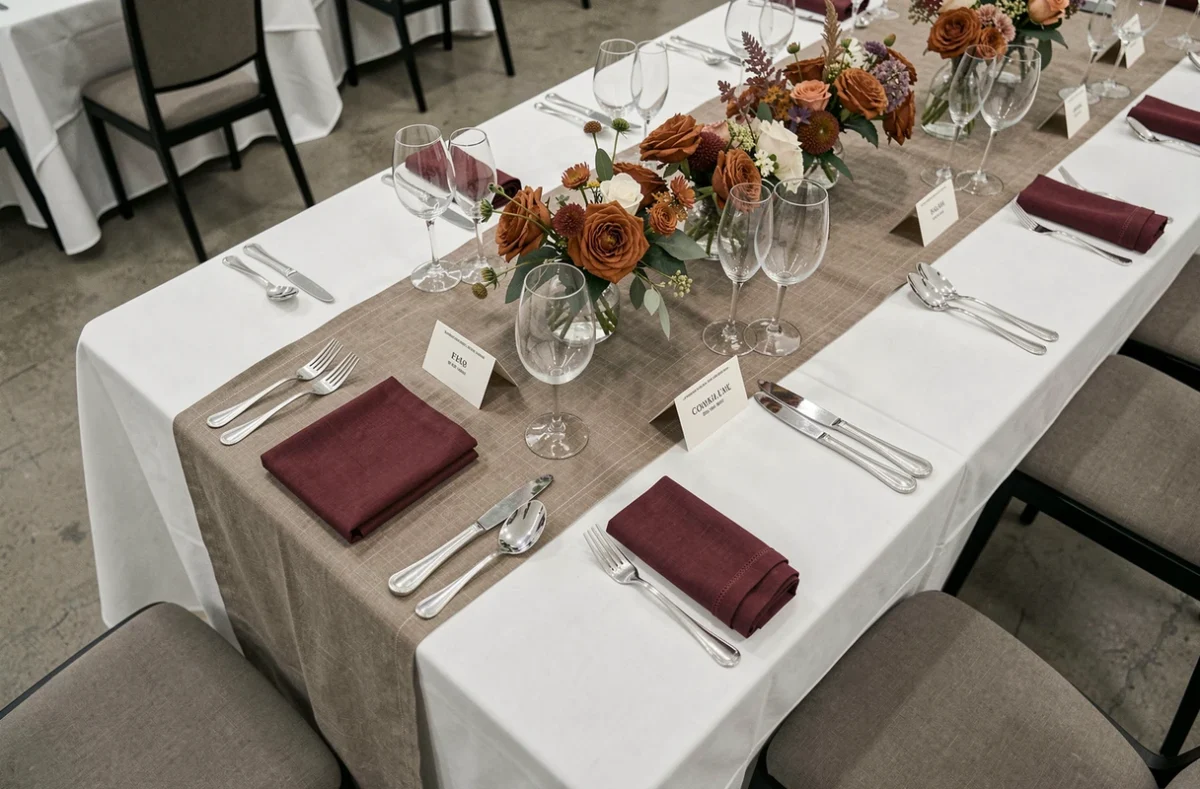
Rectangular tables make the most of the available space, especially in long rooms. Arranged in parallel rows, they can seat more guests within the same area.
The trade-off: guests seated at the ends can feel isolated. At a wedding meal, this may leave some guests feeling left out. For a seminar or community dinner, however, this layout is highly practical.
U- or T-shaped layouts: when the event has a focal point
A U-shaped layout works well for events with a head table or speeches. The central space can be used for entertainment, a dance floor or a buffet. A T-shaped layout is a more compact alternative, suited to medium-sized groups.
These layouts require a room wide enough to keep the central space from feeling cramped. If the U is too narrow, guests seated opposite each other along the parallel sides will be almost back-to-back with those at the far end.
Areas without tables: buffet, dance floor and welcome area
A common mistake is to fill the room with tables and then try to find space for the buffet, DJ or coat check. The result: last-minute changes that throw the whole layout into disarray.
- Position the dance floor away from the nearest tables to reduce noise, but make sure it’s visible from most seats.
- The buffet needs space for a queue on at least two sides. Otherwise, guests will form a single line that blocks an entire walkway.
- Place the welcome area (guest book, coat check, gift box) near the main entrance, not in the middle of the room.
Mark these areas on the plan before positioning the tables. This is the approach event professionals recommend for galas, and it works just as well for a 50-person birthday party.
Accessibility and table bases: small details that make a big difference
Planning for accessibility from the outset avoids last-minute workarounds on the day. It’s much easier to provide a clear, accessible route from the entrance to accessible seating before the tables are set up.
The type of table base also makes a practical difference. A central pedestal base (a single support beneath the table) makes it easier for a wheelchair user to get close, while a conventional four-leg base can get in the way of their knees. Check this with the furniture rental company or venue manager.
Also consider guests with limited mobility who don’t use wheelchairs: an older person with a cane needs clear space to sit down and stand up without bumping into their neighbors.
Scaled floor plan: a reliable way to cover every detail
A rough sketch isn’t enough. Even a simple scaled floor plan can prevent unpleasant surprises on setup day.
- Measure the room (length, width, alcoves and pillars).
- Mark emergency exits, electrical outlets and water points on the plan.
- Position areas without tables first (buffet, stage, welcome area), then arrange the tables in the remaining space.
- Check that every row of tables leaves enough clear space for service and evacuation.
You can draw the plan on graph paper or use a free online drawing tool. The goal is to create a document you can share with the caterer, furniture rental company and venue manager.
This scaled floor plan also serves as a safety document: in the event of an inspection or incident, it shows that the required clearances were maintained during setup. It’s better to spend an hour on the plan before the event than to move tables in front of your guests.