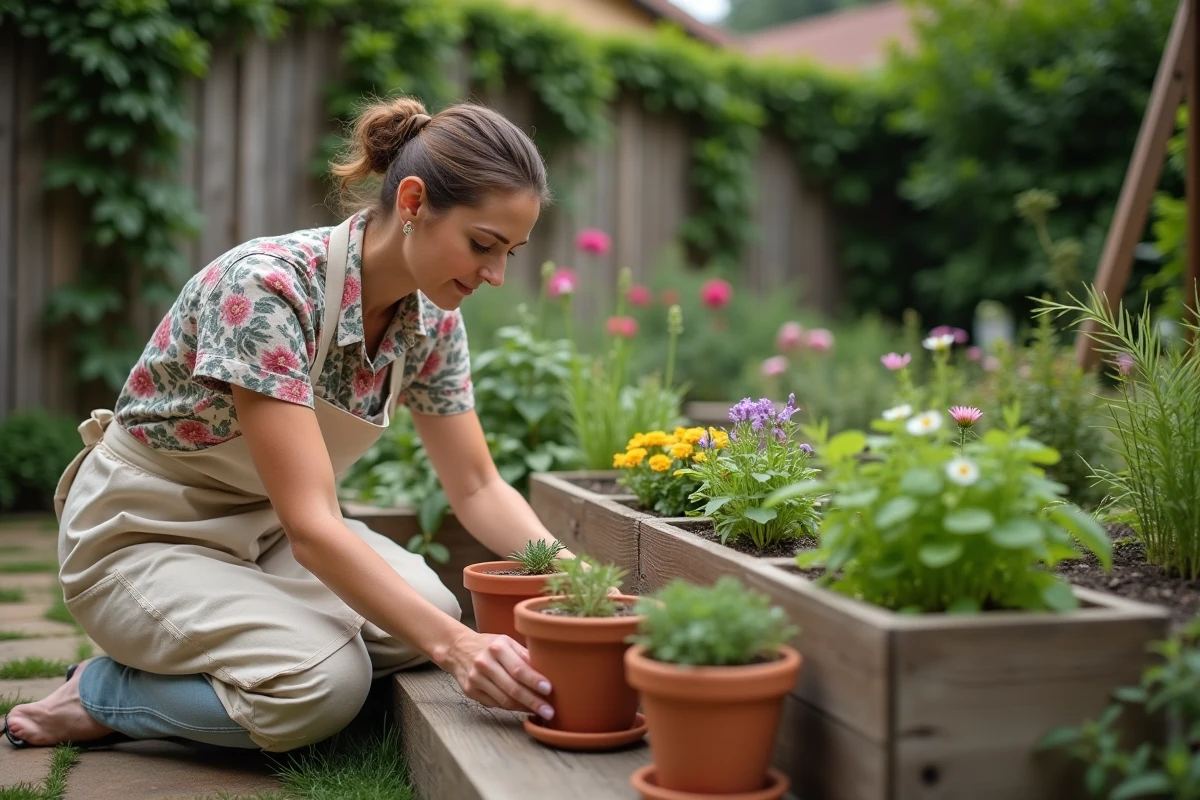
Transforming a garden into a peaceful haven requires measuring what truly impacts the perceived comfort: ambient noise, water consumption, and weekly maintenance time. These three parameters vary significantly depending on landscaping choices, and the differences between traditional approaches and adapted solutions deserve comparison before touching a single plant.
Noise, Water, and Maintenance: A Comparison of Garden Designs
The data published by ADEME since 2023 and the documents from the Ministry of Ecological Transition provide a concrete framework. The table below contrasts two landscaping logics based on the criteria that most determine the calming nature of an outdoor space.
| Criterion | Traditional Garden (lawn, cypress, watering) | Redesigned Garden (mulching, mixed hedges, local plants) |
|---|---|---|
| Reduction of external noise | Low (sparse, single-species hedge) | Significant (dense hedge, planted mounds, vegetated screens) |
| Summer water consumption | High (short lawn, non-adapted plants) | Reduced (systematic mulching, Mediterranean or local species) |
| Weekly maintenance time | High (frequent mowing, regular pruning) | Moderate (unmowed grassy areas, self-sufficient perennials) |
| Welcomed biodiversity | Limited | High (accessible LPO Refuge label) |
The most striking difference concerns water management. Since the droughts of 2022-2023, the Ministry of Ecological Transition recommends drastically reducing traditional lawn areas and adopting systematic mulching. A garden designed to be relaxing can no longer ignore this water constraint.
To delve deeper into each aspect of outdoor landscaping, Brico Déco Jardin’s advice details options suited to different surfaces and budgets.
Acoustic Landscaping: Reducing Noise Without Walls
ADEME identifies noise as a central factor in perceiving a garden as a place of rest. A regularly trimmed cypress hedge allows most noise disturbances to pass through. In contrast, a dense hedge composed of varied species mitigates noise much more effectively than a rigid fence alone.
Three plant-based solutions recommended by ADEME since 2023:
- Mixed hedges (privet, hornbeam, hazel) in multiple rows, which create an acoustic barrier due to the density and diversity of evergreen and deciduous foliage.
- Planted mounds along the property line, which combine earth mass and vegetation to absorb low frequencies from road traffic.
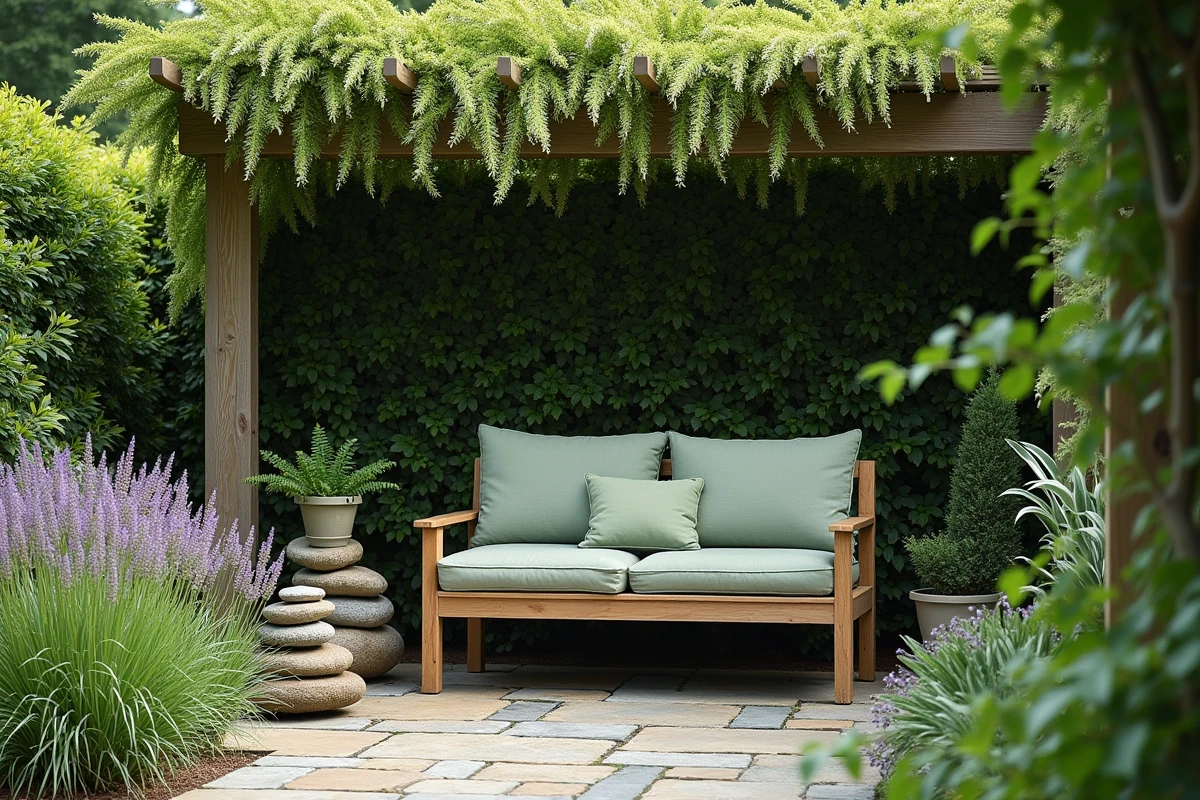
- Vegetated screens (lattice wood covered with climbing plants like star jasmine or honeysuckle), which add a layer of sound filtering while providing a decorative element.
The choice between these solutions depends on the available space. On a balcony or terrace, a vegetated screen remains the only realistic option. On a larger plot, the combination of mounds and mixed hedges yields the best results.
The Ground as a Sound Absorber
The type of flooring also plays a role. A mineral pavement reflects sound, while a surface made of wood bark, fine gravel, or natural grass absorbs it. Alternating wood zones and plant areas reduces sound reverberation in the relaxation space.
Drought-Resistant Plants for a Calming Garden Year-Round
The Ministry of Ecological Transition now explicitly recommends drought-resistant Mediterranean or local plants. This shift profoundly alters the plant palette of a garden designed as a peaceful retreat.
Systematic mulching is the first action with a real impact on water consumption. It maintains soil moisture, limits weeds, and significantly reduces watering frequency. Mineral mulching (slate, pumice) or organic (wood chips, hemp straw): the choice depends on the desired style and soil acidity.
Mediterranean perennials (lavender, rosemary, common sage, gaura) require very little water once established and provide blooms from spring to autumn. For structural plant furniture, ornamental grasses (miscanthus, stipa) create visual movement and a soothing rustle in a light breeze.
Unmowed Grassy Areas: A Design Choice, Not Abandonment
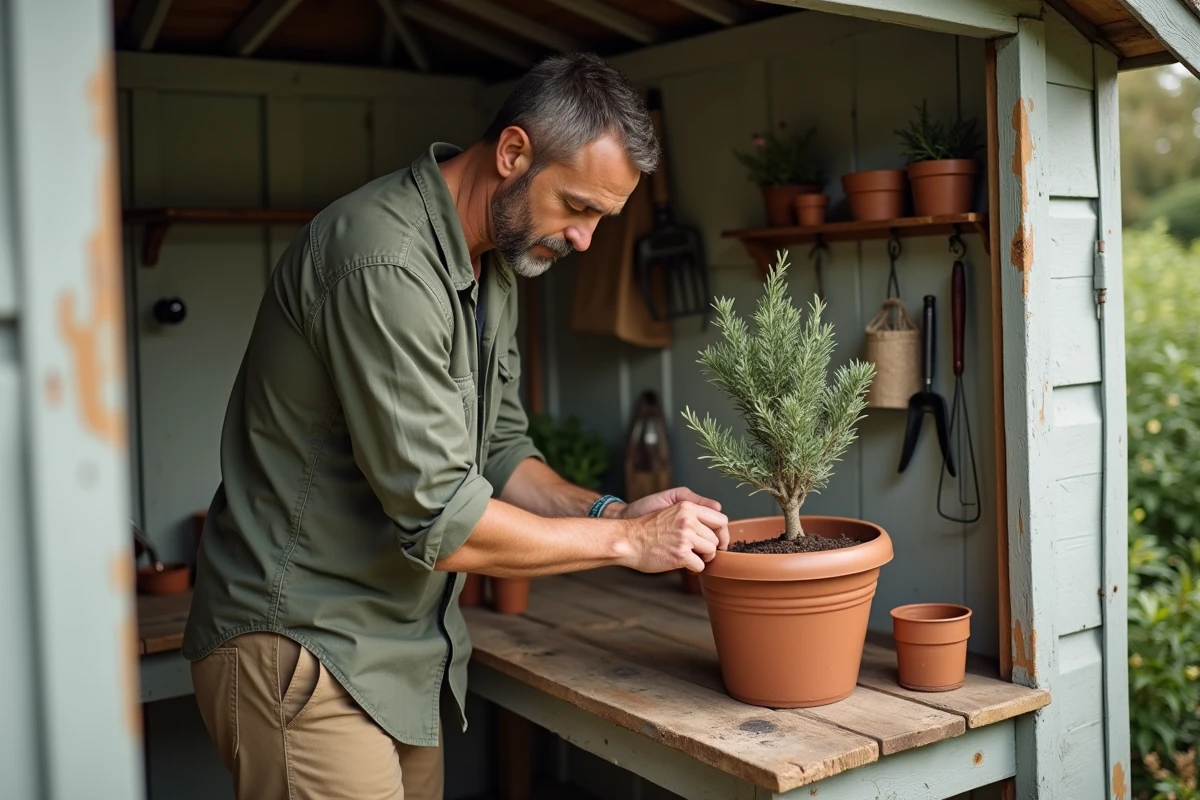
The LPO includes unmowed grassy areas in the criteria for its “LPO Refuge – Nature Garden” label, offered since 2022. Keeping a strip of natural meadow in a corner of the garden reduces mowing time, supports pollinators, and gives a rustic appearance effortlessly. A garden labeled as an LPO Refuge combines human comfort with the welcome of local wildlife.
Outdoor Furniture and Decoration: What Truly Changes the Atmosphere
Garden furniture determines how the space is used daily. A solid wood garden lounge (acacia, treated eucalyptus) ages better than low-quality woven resin furniture and integrates into a natural style without additional decorative effort.
Arrangement matters more than the quantity of furniture. A single chair oriented towards a focal point (flowering bed, water feature, remarkable tree) transforms an unused corner into a reading space. Conversely, overcrowding a terrace with furniture produces the opposite effect of what is desired.
A shallow water feature attracts wildlife and creates a natural sound backdrop that masks residual urban noise. A simple basin placed on the ground, fed by a small solar system, is sufficient. The LPO also recommends shallow water features as a structuring element of a refuge garden.
Outdoor lighting deserves special attention. Low-intensity solar fixtures directed downward avoid light pollution (which disrupts nocturnal wildlife) while making the garden usable in the evening. Preferring warm tones over cool whites reduces visual aggressiveness and extends the feeling of calm after sunset.
Transforming a garden into a truly calming space relies less on decoration and more on three technical decisions: noise management, the choice of plants suited to the local climate, and the reduction of unnecessary maintenance. The most restful gardens are often those that require the least intervention.