
An extreme accumulation of objects does not always follow a material or utilitarian logic. The effects on physical and mental health often go beyond mere discomfort or apparent disorder. This phenomenon affects all age groups and social backgrounds, without clear distinction, and is frequently accompanied by significant invisible suffering. The difficulty in throwing things away is not just a matter of habit or laziness, but a possible indicator of deeper issues, often ignored or misunderstood. Addressing and understanding this behavior requires a specific approach, tailored to the complexity of each situation.
When accumulation becomes a burden: recognizing syllogomania and Diogenes syndrome
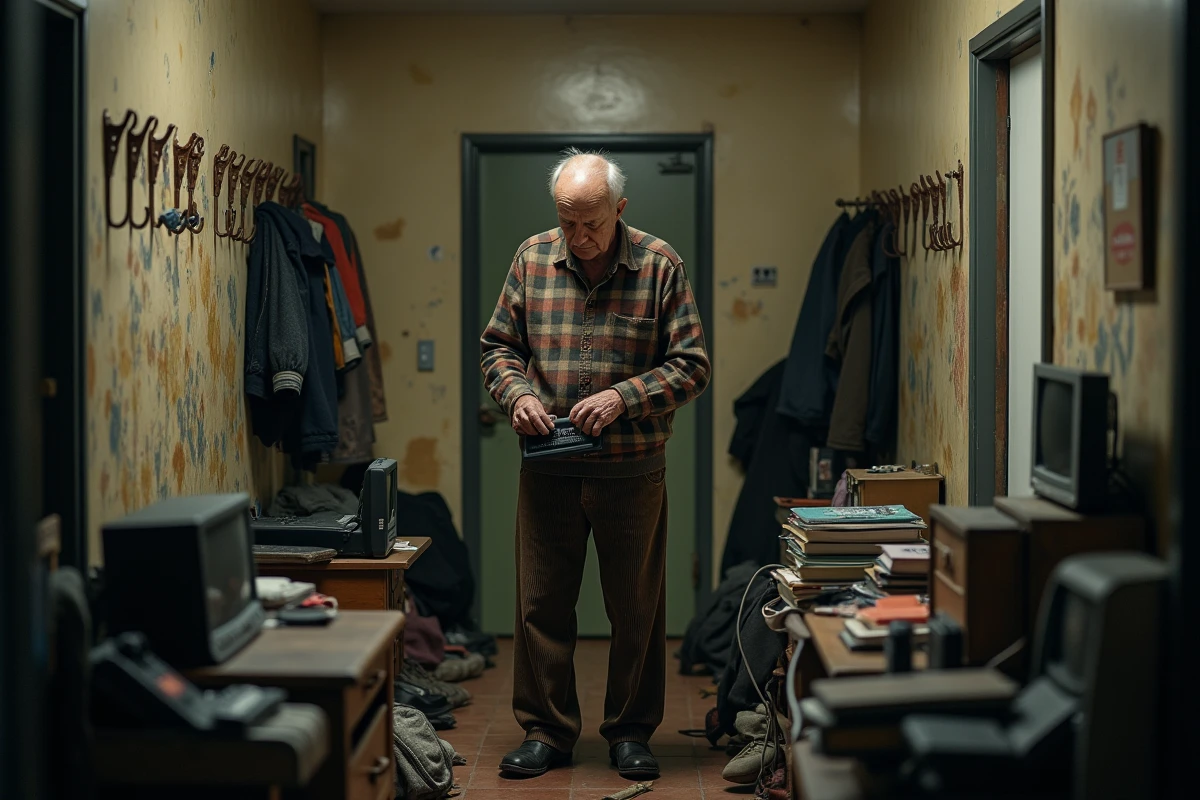
Syllogomania, also known as compulsive hoarding disorder or pathological hoarding, insidiously settles into the daily lives of many people in France. This disorder, now included in the Diagnostic and Statistical Manual of Mental Disorders (DSM-5), is characterized by an overwhelming accumulation of objects and an almost insurmountable difficulty in parting with them. Objects pile up, taking over life. The simple act of moving around one’s home becomes a challenge, hygiene deteriorates, and personal space shrinks.
When this behavior escalates, Diogenes syndrome emerges, pushing accumulation to a critical point. Self-neglect sets in, isolation deepens, and the state of the living environment is no longer a concern. Some individuals express this disorder in particular ways: Noah’s syndrome drives them to collect an unmanageable number of animals, while bibliomania turns the home into a labyrinth of books. History has notable figures, such as the Collyer brothers in New York, whose apartment was buried under 140 tons of objects and debris, leading to their tragic disappearance.
This is not merely a quirk or a strange taste for disorder: syllogomania isolates, weakens, and sometimes breaks. From the outside, one often perceives only disorder, rarely the distress. To better understand the depth and diversity of these situations, reading the article on Passez l’info helps grasp the scope and challenges related to the disorder. Accumulation deserves attention, for behind every pile of objects, there is a story, a struggle, a suffering that should not be overlooked.
Why is it so difficult to throw things away? Understanding the psychological mechanisms behind accumulation
This disorder, which resembles obsessive-compulsive disorders (OCD), has its roots in an intimate mechanism: each object takes on emotional value, becoming a silent witness to an episode, a memory, a fear of loss. Parting with an object means breaking away from a part of oneself, from a slice of life that is sometimes idealized, sometimes painful.
Several factors contribute to the development of this disorder. Here are the most common:
- A family or genetic predisposition
- Unresolved emotional shocks or grief
- The presence of mental health issues such as ADHD, anxiety, depression, dementia, or schizophrenia
Syllogomania often begins in adolescence and strengthens over time. Without support, the habit takes root, and the prospect of change diminishes.
Social isolation exacerbates the situation. When solitude prevails, objects become silent companions, barriers against absence. Certain psychological profiles, such as obsessive-compulsive, dependent, or avoidant personalities, are particularly vulnerable. Emotional memory transforms each trinket into a relic, each magazine into an archive of a past that must not slip away.
To provide a more precise overview, here’s what recent studies highlight:
- Early signs often appear in adolescence
- It is estimated that 2 to 6% of the general population is affected
- The disorder worsens with age and isolation
Researchers like Mary E. Dozier and Lionel Dantin remind us of the multiplicity of profiles and life stories. It is impossible to reduce syllogomania to a simple question of willpower: each object thrown away can represent a victory over oneself, or conversely, a wound that is difficult to heal.
Concrete ways to help those affected and preserve their health
Housing clutter is not without consequences: it multiplies dangers, from the risk of fire to the emergence of pests, making daily life unbearable. In the face of this reality, intervention becomes essential, not to blame, but to protect. Often, it is relatives—family, friends, neighbors—who sound the alarm. Their vigilance, their ability to recognize the seriousness of the situation, can prevent many tragedies. Their support, if it remains kind and non-judgmental, can sometimes change the course of events.
To best support the affected individual, several options exist:
- Cognitive-behavioral therapies (CBT), which help rethink the relationship with objects and defuse anxious thoughts
- A medication treatment, particularly antidepressants, in cases of associated depression or anxiety
- Psychiatric hospitalization in the most severe situations, to ensure safety and organize comprehensive support
When the living environment is no longer habitable, the intervention of social workers and cleaning professionals becomes essential. This work is always built with the person, never against them. It is about moving forward step by step, rebuilding a healthy environment, preventing the return of difficulties, and above all, restoring human connection. The journey is often long, but every step counts, to regain space, dignity, and sometimes, a new beginning.
In the face of the accumulation of objects, the outstretched hand of a loved one, the gaze of a caregiver, or the patience of a professional can change a life. Behind every closed door, there may be a struggle waiting to be heard.