
An industrial machine rarely comes from a single isolated sketch. It results from a series of technical decisions, validations, and compromises between performance, cost, and deadlines. Each poorly calibrated choice upstream comes at a high cost downstream, sometimes resulting in months of delays or equipment that cannot maintain its pace. Understanding the key stages of the design and manufacturing of industrial machines is primarily knowing where to focus efforts to avoid costly rework.
Functional specifications: the foundation that no one wants to rewrite
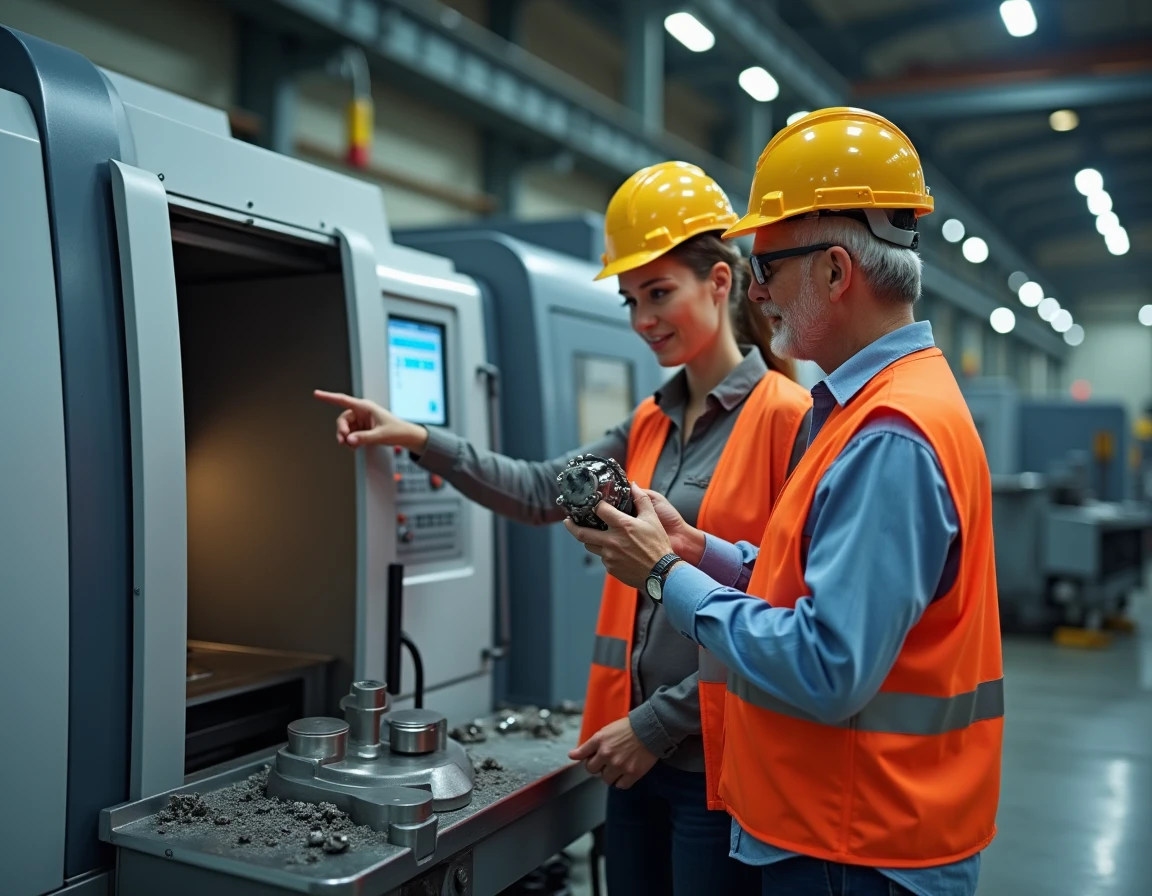
Before drawing anything, the problem must be correctly defined. The functional specifications do not list components; they describe what the machine must accomplish: target rate, tolerances, working environment, space constraints, type of products to be processed.
Why emphasize this step? Because a poorly formulated need generates a cascade of errors. If the desired rate is vague, the sizing of the actuators will be approximate. If the humidity or temperature conditions are not specified, the chosen materials may degrade prematurely.
The specifications are developed with the future operator, not in an isolated office. Each function must be prioritized: mandatory, desired, or optional. This classification directly guides design trade-offs and prevents the project from drifting towards an oversized machine. A comprehensive guide to know everything about the design of industrial machines details this formalization process.
CAD modeling and simulation: detecting errors before they become costly
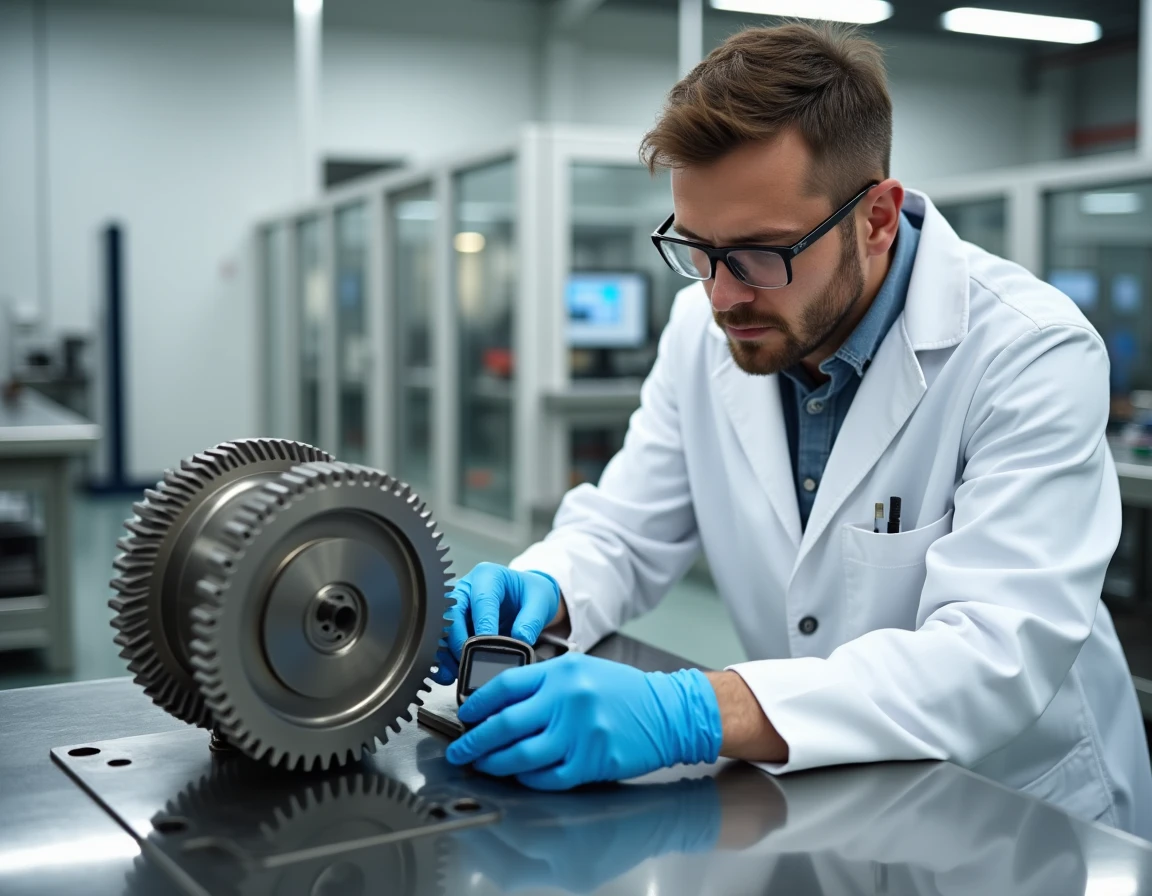
Once the need is locked in, the design office translates functions into geometry. Computer-aided design (CAD) allows for modeling each sub-assembly in three dimensions, checking for interferences between parts, and simulating mechanical behavior under load.
Finite element analysis (FEA) plays a decisive role here. It identifies areas of excessive stress, risks of fatigue, or deformation even before the first prototype is manufactured. Correcting a defect on a digital model takes a few hours; correcting it on a physical prototype takes weeks.
Have you ever seen a project where the digital model seemed perfect, but the actual assembly got stuck? The problem often arises from a lack of rigor in managing cumulative tolerances. CAD software manages nominal dimensions, but the analysis of tolerance chains remains a human skill that the tool does not replace.
Integrating cybersecurity from the modeling stage
Connected industrial machines (IIoT) can no longer be designed without considering digital security. The European NIS2 regulation requires suppliers of critical equipment to have a structured approach to cyber risk management, including network segmentation and access logging from the design phase.
ANSSI recommends integrating secure update mechanisms directly into the machine’s software architecture. Cybersecurity becomes a design stage just like mechanical or electrical compliance. Ignoring this aspect exposes one to blockages during commissioning at a client subject to NIS2.
Prototyping and validation: the mechanical moment of truth
The prototype transforms the digital model into a testable physical object. This phase reveals what the simulation does not always capture: parasitic vibrations, abnormal noises, access difficulties for maintenance, and ergonomics of the operator’s workstation.
A prototype is not a pre-series. Its role is to validate critical choices:
- Mechanical integrity of welded or bolted assemblies under actual production loads
- Effective cycle time compared to the theoretical rate in the specifications
- Accessibility of wear parts for routine maintenance operations
- Compliance with operator safety requirements (safety distances, guards, emergency stops)
Validation tests follow a pre-defined protocol: load tests, endurance tests, vibration measurements, electrical checks. Every non-conformity detected must be traced and corrected before moving to series production.
Manufacturing and assembly of industrial machines: controlling every weld
The actual manufacturing involves several trades: machining, boiler making, electrical wiring, pneumatic or hydraulic integration, programming of controllers. The final quality depends on the coordination between these trades.
A often underestimated point: the traceability of components. In demanding sectors (aerospace, nuclear, defense), every batch of material, every supplier’s certificate of conformity must be archived and linked to the delivered machine. This traceability is not an administrative burden; it is an assurance in case of subsequent failure.
The assembly follows a sequenced assembly plan. Each step undergoes an intermediate check:
- Dimensional control of machined parts before assembly
- Verification of the tightening torque on critical fastenings
- Leak tests on hydraulic or pneumatic circuits
- Functional tests of each sub-assembly before final integration
CE marking and new software regulations
CE marking remains mandatory for any machine placed on the European market. It covers mechanical safety, electrical safety, and electromagnetic compatibility. For machines incorporating artificial intelligence algorithms, the European AI Regulation (AI Act), adopted in 2024, adds obligations for transparency and risk management when the system is classified as high risk.
Regulatory compliance is not addressed at the end of the project; it is prepared from the specifications stage. Waiting until the commissioning phase to address it leads to late, costly, and destabilizing structural modifications for the schedule.
Commissioning and field feedback: the machine facing reality
The installation at the client’s site is the last visible step, but not the final step of the project. Commissioning includes connecting to utilities (energy, fluids, network), configuring controllers, training operators, and a gradual ramp-up period.
Field feedback from the first weeks of operation directly feeds into continuous improvement. Actual production data allows for adjusting tuning parameters, identifying components subject to faster-than-expected wear, and optimizing preventive maintenance intervals.
A successful industrial machine project does not stop at delivery. The value of a design is measured in the first months of operation, when the machine runs under real conditions, with real operators and real production constraints.