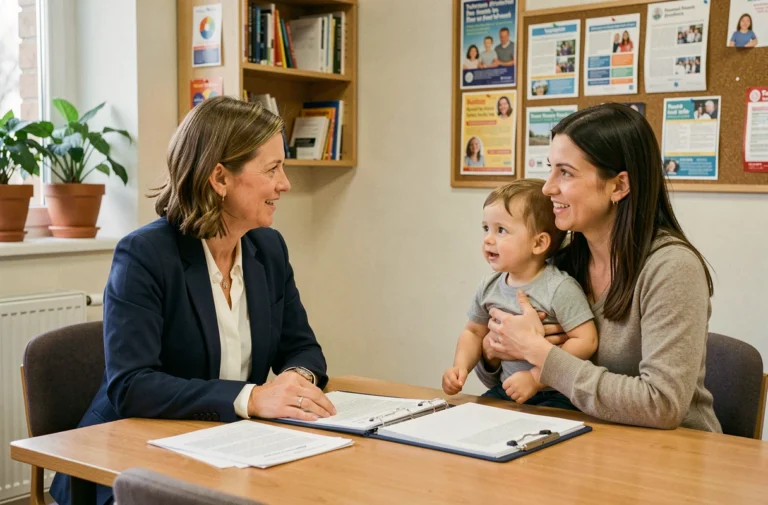
Online female entrepreneurship today represents a growing share of business creation in France. More than four new sole proprietorships out of ten are led by women, according to available data. Behind this dynamic, digital tools and support pathways are multiplying, but their actual effectiveness depends on factors that traditional guides rarely address.
Entrepreneurial self-assessment: an underestimated prerequisite in the online journey
Most content on female entrepreneurship begins with the search for a business idea. Recent support mechanisms take the problem in reverse: they place self-assessment before choosing an activity. ITCILO, for example, offers a tool dedicated to female entrepreneurs to diagnose their skills, identify personal barriers, and measure their project maturity.
This approach changes the logic of launching. Rather than choosing a freelance activity or an online business because it seems promising, self-assessment allows one to confront their actual skills with the demands of the targeted sector. A gap between the two is the primary cause of abandonment in the months following creation.
Several French-speaking platforms now offer free or low-cost online diagnostics. To delve deeper into this type of approach, the resources from Blogueuse Entrepreneuse compile tools and feedback oriented towards women’s digital activities.

Digital tools for female entrepreneurs: what really makes the difference
The online female entrepreneur’s toolkit consists of three distinct layers. The first concerns administrative and accounting management. The second focuses on sales and marketing. The third, often overlooked, pertains to continuous training and skill development.
Management and accounting in micro-enterprise
The status of auto-entrepreneur remains the most common entry point. Free (or freemium) invoicing and cash flow tracking tools have multiplied in recent years. Choosing an accounting tool suitable for the tax regime avoids frequent reporting errors among entrepreneurs who start without accounting training.
Sales and online visibility
For a freelance activity, training, or selling digital products, visibility relies on a triptych: website or sales page, presence on social media, and email list. Field feedback varies on the order of priority. Some entrepreneurs generate their first income solely through Instagram or LinkedIn, without a website.
In contrast, an email list remains the most sustainable asset for an online activity, as it does not depend on a third-party algorithm. Free emailing tools up to a certain subscriber volume (Mailerlite, Brevo) allow starting without investment.
- A billing tool compliant with the micro-entrepreneur regime, to avoid reporting errors and save time on administration
- An emailing platform with basic automation, to build an audience independent of social networks
- A content planning tool (Notion, Trello, or equivalent), to maintain a regular publication schedule without dedicating disproportionate time
Continuous training and career change: the blind spots of online journeys
The online training market for female entrepreneurs has become a recognized sub-market, with its own codes and limits. Programs are multiplying, but quality varies significantly from one organization to another. Few online courses have certification recognized by funding bodies (OPCO, CPF).
For women undergoing career changes, this distinction is crucial. A CPF-eligible training can be funded without upfront cash flow. A non-certified training, even if relevant in content, represents a personal investment that can hinder launching.
The ILO guide on female entrepreneurship emphasizes that the most effective support mechanisms are not limited to funding. They integrate capacity building: project management, business strategy, negotiation. These practical skills are often lacking in “online business” training focused on marketing.
Books and supplementary resources
On the book front, the French-speaking market offers works that oscillate between personal development and business methods. The most useful are those that detail concrete processes: structuring a service offer, setting freelance rates, automating prospecting. A good business book rarely replaces guidance, but it helps establish a methodological framework before investing in paid training.

Specific barriers and realities of online female entrepreneurship
Access to financing remains a documented barrier. Available data shows that female entrepreneurs request lower loan amounts than men and receive more modest funding for comparable projects. Online, this barrier is mitigated by lower startup costs, but it reappears as soon as the activity requires investment in advertising or premium tools.
The balance between professional activity and personal life constitutes another factor. Online entrepreneurs frequently cite flexible hours as their initial motivation, but field feedback nuances this point. The flexibility of online work does not eliminate mental load, it redistributes it over different time slots.
- The impostor syndrome, documented as more frequent among female entrepreneurs, hinders visibility and price increases
- Professional isolation, particularly marked in 100% online activities, drives some entrepreneurs to join networks or virtual coworking spaces
- The difficulty in setting fair prices, often linked to an underestimation of the value of one’s expertise in service and consulting professions
Support programs that document these concrete barriers, such as the PULSE Group guide on inclusive entrepreneurship, provide a more grounded perspective than general content. They allow anticipating obstacles rather than discovering them along the way.
Online female entrepreneurship is not just about choosing a tool or platform. The strength of the project relies on an honest assessment of one’s skills, a rigorous selection of training, and a clear awareness of the structural barriers that persist despite the democratization of digital technology.